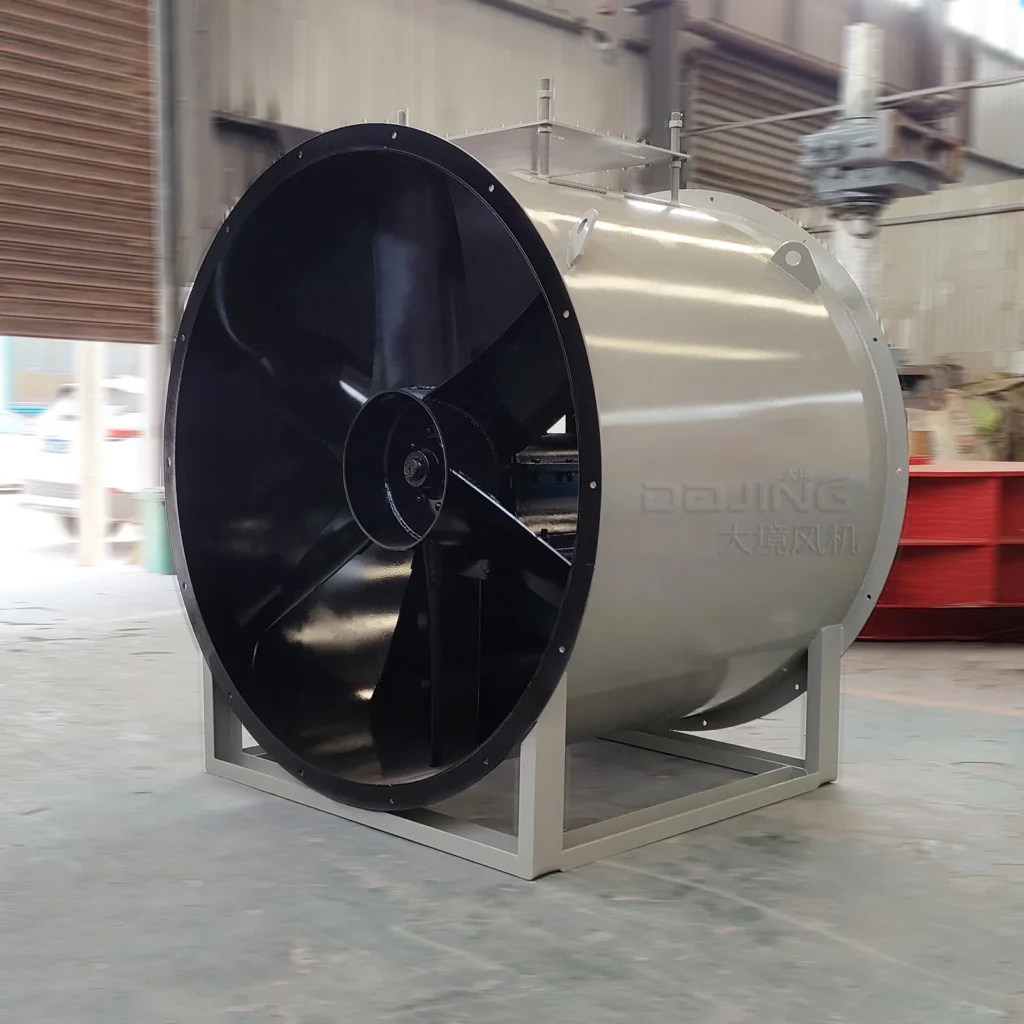
Corrosion-resistant axial flow fans are ventilation equipment specifically designed for environments with corrosive gases or harsh conditions. Their key components—such as impellers, housings, and brackets—are typically manufactured from corrosion-resistant materials like fiberglass-reinforced plastic (FRP), polypropylene (PP), PVC, stainless steel (e.g., 304, 316L), or treated with specialized anti-corrosion coatings.
Consequently, they are primarily applied in the following industries and locations where chemical corrosion risks exist:
I. Core Application Industries
Chemical and Petrochemical Industries
Application Scenarios: Chemical plants, production workshops, reactor areas, storage tank zones, pipeline galleries.
Function: Remove corrosive toxic gases generated during production—including acid mists, alkali mists, organic solvent vapors (e.g., benzene, toluene), hydrogen sulfide, and chlorine gas—to ensure safe operations and personnel health.
Electroplating and Surface Treatment Industries
Application Scenarios: Electroplating workshops, acid washing lines, phosphating tanks, anodizing workshops.
Function: Powerfully exhausts high-concentration acid mists (hydrochloric, sulfuric, nitric acids), alkali mists, chromic acid mists, etc. Essential equipment for forced ventilation in such workshops, effectively protecting plant structures and other equipment.
Wastewater Treatment and Environmental Protection Industry
Application Scenarios: Pump stations, screen rooms, biochemical tanks, sludge treatment workshops, waste transfer stations, or leachate treatment stations in wastewater treatment plants.
Function: Ventilation and air exchange to remove putrid gases like hydrogen sulfide, ammonia, methane, and moist water vapor. These gases become highly corrosive when mixed.
Metallurgy and Mining Industry
Application Scenarios: Smelting workshops, leaching workshops, electrolysis workshops (especially hydrometallurgy for copper, zinc, nickel, etc.), underground coal mines.
Function: Remove sulfur dioxide, chlorine gas, dust, and humid air containing corrosive components.
Paper and Textile Industry
Application Scenarios: Pulping and bleaching workshops in paper mills; printing, dyeing, and bleaching workshops in textile mills.
Function: Remove high-temperature, high-humidity chlorine gas, hypochlorite vapor, sulfur dioxide, and various dye chemical vapors.
Food and Pharmaceutical Industry
Application Scenarios: Fermentation workshops, pickling workshops, food additive production areas, and synthesis workshops in pharmaceutical plants.
Function: In corrosion-prone process segments, exhausts humid corrosive air containing salts, organic acids (e.g., citric acid, acetic acid), alcohol vapors, while meeting specific sanitary requirements.
Marine and Shipbuilding Industry
Application Scenarios: Ship engine rooms, pump rooms, cargo holds (especially for chemical transport), offshore platforms, coastal factories.
Function: Marine environments inherently contain salt fog with highly corrosive chloride ions. Corrosion-resistant fans ventilate to prevent rapid equipment rusting.
Laboratories and Research Institutions
Application Scenarios: Ventilation hoods and exhaust systems in chemical and biological laboratories.
Function: Safely discharge complex, potentially corrosive gases generated during experiments.
II. Typical Application Scenarios (Functional Classification)
Workshop General Ventilation: Air exchange across entire work areas to dilute corrosive gas concentrations.
Localized Forced Exhaust: Installed at pollution sources like tank edges or above reactors to capture and remove corrosive gases directly at the source.
Process Gas Conveyance: Used in certain scenarios to transport corrosive media (requires specialized selection and design based on medium properties).
Cooling Tower Ventilation: Supports fiberglass cooling towers in chemical plants and similar facilities by providing heat-dissipating airflow.
Tunnel and Underground Facility Ventilation: Serves municipal utility tunnels and underground parking garages in corrosive environments (exhaust gases containing sulfides and nitrogen oxides).
III. Key Material Selection Considerations
Users must determine fan material based on the type, concentration, temperature, and humidity of corrosive media in the specific environment:
FRP (Fiber-Reinforced Plastic): Strong resistance to acid, alkali, and salt corrosion; most widely used, but not resistant to certain organic solvents or high temperatures.
PP/PVC: Excellent resistance to strong acids and alkalis; lower cost, but weaker strength and temperature tolerance.
Stainless Steel: 304 suitable for general mildly corrosive environments; 316L suitable for chloride-containing environments (e.g., seawater, salt spray), with superior pitting corrosion resistance.
Specialized Coatings: Epoxy, polyester, or PVDF coatings sprayed onto carbon steel substrates provide cost-effective solutions for specific corrosive environments.
In summary, corrosion-resistant axial fans serve as critical infrastructure in corrosive industrial settings, ensuring ventilation safety, extending equipment lifespan, and protecting personnel health. Their selection requires professional assessment based on specific process conditions and corrosive media.