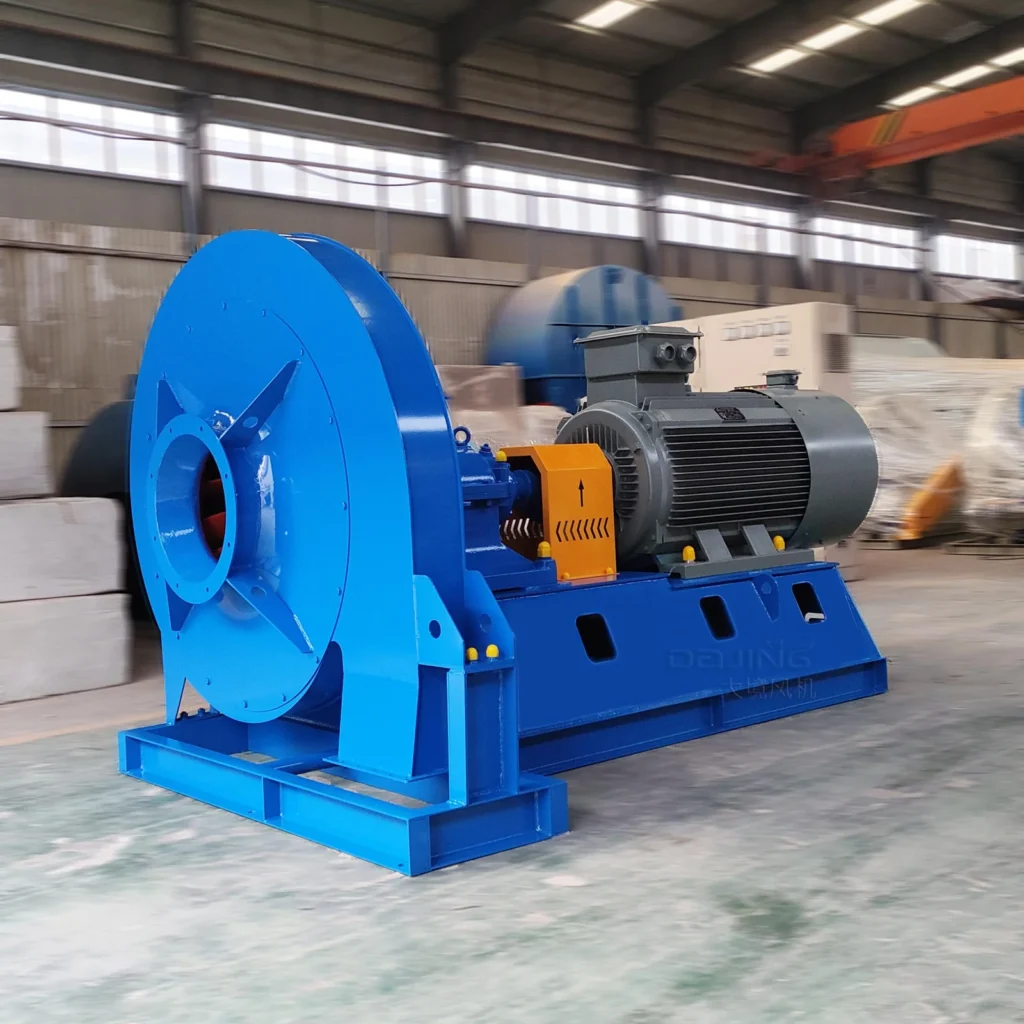
Boiler fans are critical auxiliary equipment in boiler systems, primarily used to supply combustion air, exhaust flue gases, and maintain system pressure balance. Their applications span virtually all industrial and civil sectors requiring thermal energy, steam, or heat. Key application industries include:
1. Power and Energy Sector
Thermal Power Plants: Core application area. Supplies primary air (for coal powder delivery), secondary air (for combustion assistance), and induced draft fans (for flue gas extraction) to coal-fired, gas-fired, and biomass boilers, ensuring safe and efficient plant operation.
Cogeneration/On-site Power Plants: Supports boilers in industrial parks, urban district heating systems, or large-scale factory-owned power stations.
Waste-to-Energy: Supplies combustion air to incinerators and exhausts flue gases.
Nuclear Power: Also applied in certain auxiliary systems and conventional islands.
2. Industrial Production and Manufacturing
Chemicals and Petrochemicals: Provides air sources for process heaters, cracking furnaces, and steam boilers in production processes, supporting process heating, reactions, and mechanical drives.
Metallurgy and Steel: Used in blast furnace hot blast stoves, steelmaking workshops, rolling mill production lines, and smelting/heating furnaces for non-ferrous metal smelting.
Paper Industry: Supplies air to alkali recovery boilers and power boilers, forming the core of paper mill energy systems.
Textile Printing and Dyeing: Provides stable heat sources for setting machines, dryers, and steam boilers.
Food & Beverage: Widely applied in steam boilers for brewing, sterilization, drying, and cooking processes.
Pharmaceutical Industry: Used for sterilization, drying, and clean steam production in pharmaceutical manufacturing.
Rubber & Plastics: Serves as heat source boilers for vulcanization, calendering, and drying processes.
3. Building Materials Industry
Cement Production: Paired with waste heat recovery boilers at kiln tails to recycle exhaust heat energy.
Glass Manufacturing: Supplies combustion air for glass melting furnaces.
Ceramics and Tiles: Heats tunnel kilns and roller kilns.
4. Civil and Commercial Sectors
District Heating: Critical in heat stations and large boiler rooms for regional heating.
Hotels, Hospitals, Schools: Supply steam or hot water for domestic hot water, heating, sterilization, laundry facilities, etc.
Commercial Complexes: Serve as steam or hot water sources for central air conditioning systems.
5. Other Key Industries
Shipbuilding and Marine Engineering: Auxiliary boilers or main propulsion boilers on large vessels (e.g., oil tankers, container ships).
Military: Steam power or heating systems for naval vessels and bases.
Agriculture and Agri-Processing: Applications include greenhouse heating, grain drying, tobacco curing, and tea processing.
Primary Types and Functions of Boiler Fans
Induced Draft Fan: Installed at the boiler’s rear to extract combustion flue gases and discharge them through the chimney, maintaining negative pressure in the furnace.
Blower: Supplies combustion air to the boiler, overcoming resistance in air ducts and burners.
Primary Air Fan (primarily for pulverized coal boilers): Specifically conveys the pulverized coal-air mixture or provides drying air for the coal grinding system.
Sealing Fan, Return Air Fan, etc.: Used for auxiliary functions in special boilers like circulating fluidized bed boilers.
Technological Development Trends
High Efficiency & Energy Savings: Utilizing variable frequency drives and high-efficiency impeller designs to reduce energy consumption of these “power-hungry beasts.”
Low Noise & Vibration: Improving working environments.
Corrosion & Wear Resistance: Adapting to corrosive flue gases produced by complex fuels like waste incineration and biomass.
Intelligent Control: Integrating with boiler DCS/PLC systems to achieve precise automatic regulation of air volume and pressure.
Summary
Boiler fans serve as the “lungs” of thermal power systems in modern industry and urban infrastructure. Their application depth and breadth directly correlate with societal industrialization and urbanization levels. Any location requiring stable, reliable heat sources and power relies heavily on boilers and their fan systems. With advancements in new energy and environmental technologies, their role in eco-friendly energy sectors like biomass power generation and waste treatment is increasingly prominent.