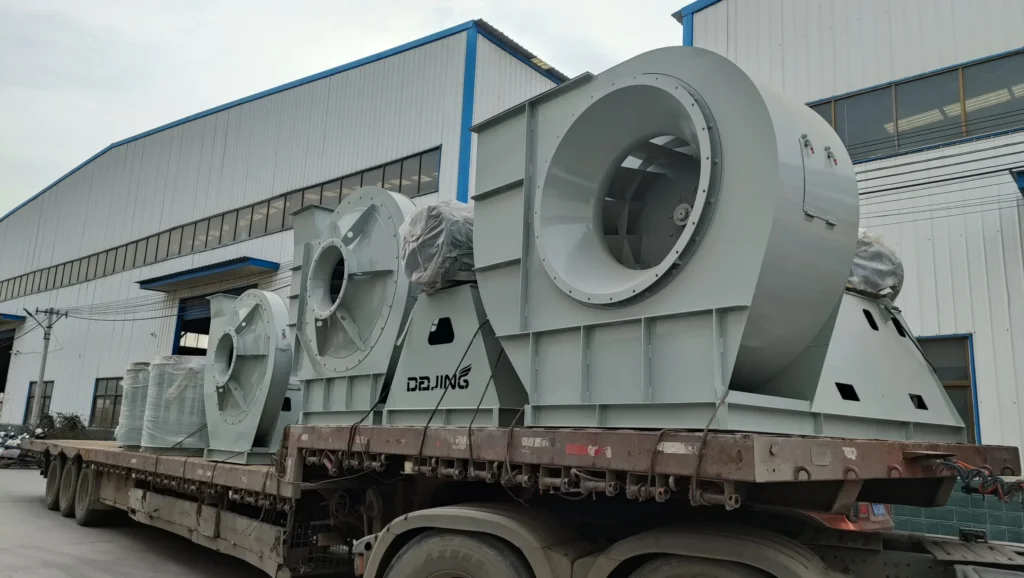
Place the unit in a dedicated dust removal chamber. Connect it to the dust collector via appropriate ductwork and dust hoods. Plug in the power supply and activate the fan switch. Dust-laden air flows from the dust source through the dust hood, ductwork, and air inlet into the housing. Due to sudden expansion of the airflow and a rapid decrease in velocity, larger dust particles remain trapped by their own weight and settle into the ash collection drawer. Through filtration, collision, interception, and electrostatic effects within the filter cartridges, residual dust particles are captured on the outer surface of the filter media. Purified air is then discharged through the fan’s outlet. Air purified by the dust extraction fan unit can be directly circulated indoors for reuse, ensuring ventilation without heat loss.
The editor from China Dajing Dust Extraction Fan Manufacturer notes: Correct installation involves mounting the dust extraction fan on the belt support frame of the 40-45m longwall shearer at the working face, advancing forward with the working face.
Dust extraction duct installation method:
– Distance between the fan’s air intake (frame duct) and the working surface must not exceed 2 meters; between 15-20 meters; the cylinder outlet should be 15-20 meters from the working face. The section of the dust collector fan duct extending from the outlet to the working face must advance continuously with excavation, maintaining a maximum distance of 5 meters from the face. Standard hoisting shafts must be used; the fan must not be connected for operation until the working face ceases air discharge, the dust collector fan malfunctions, or stops due to failure.
China Dajing Boiler Fan Manufacturer states that the dust collector fan and the push-in fan are interlocked. When the push-in fan stops operating, the pull-out fan automatically ceases operation. If the push-in fan has not started, the dust extraction fan is locked and cannot be activated. Should the dust extraction fan stop, connect the terminal end of the pressurized duct to the standby duct section at the working face to ensure normal pressurized air supply to the working face. Ensure the outlet of the pressurized air duct is no more than 5 meters from the working face. Dust generated at the working surface is captured by the dust extraction fan.