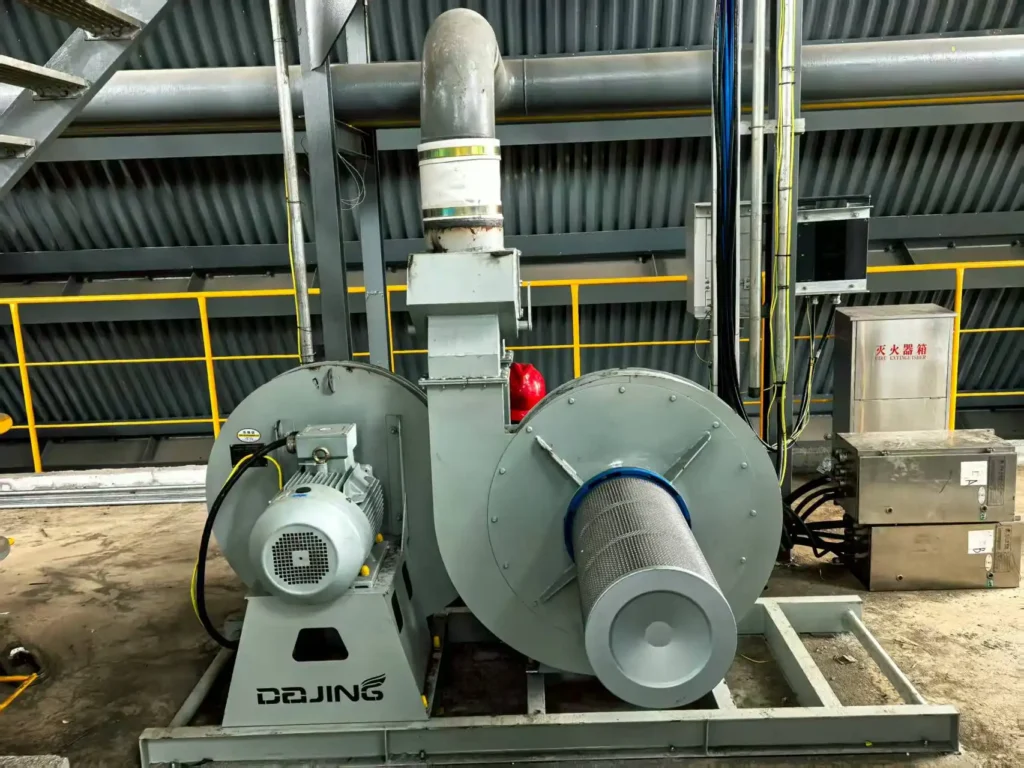
Flame detection cooling units are critical auxiliary equipment in thermal power plants, with their core function being to cool and protect the “flame detector.”
I. Core Purpose: Why is it needed?
In coal- or gas-fired boilers, the flame detector acts as the boiler’s “eyes.” Typically installed near the burner, it constantly monitors whether the flame is burning normally. Its role is vital:
Ensuring Safety: Detecting flame-outs to prevent fuel accumulation and potential explosions within the furnace.
Controlling Combustion: Providing flame signals to the automatic combustion control system.
However, the environment near the burner is extremely harsh:
High Temperatures: Furnace temperatures exceed 1000°C, with intense radiant heat.
Dust: Coal dust or particulates can contaminate the lens.
Oil/Coking: Fuel oil or combustion byproducts may adhere.
If flame detectors are directly exposed to this environment, they quickly fail due to overheating or lens contamination, becoming “blind” and triggering false alarms or safety incidents.
The flame detector cooling unit was developed to address this issue. It provides a continuous, clean, cooling “protective air curtain” for the flame detector.
II. System Components
A typical flame detector cooling unit usually comprises the following components:
Fan: The system’s “heart.” Typically two units (one active, one standby) provide a continuous, stable cooling air supply. The standby fan automatically activates during main fan failure, ensuring uninterrupted protection.
Air Filter: Installed at the fan inlet. Removes dust and particulates from the air, supplying clean air to prevent contaminants from being blown toward the flame detector lens.
Cooler: Some designs incorporate air-cooled or water-cooled heat exchangers. These provide additional cooling when ambient temperatures are high or when fan-compressed air causes temperature rise, ensuring the supply air remains sufficiently low (typically slightly above ambient temperature but well below furnace temperatures). .
Ductwork, Valves, and Instrumentation:
Ducts/Pipes: Distribute cooling air to each flame detector.
Regulating Valves/Orifice Plates: Allocate and adjust cooling air volume to each flame detector, ensuring adequate cooling for every probe.
Pressure Gauges/Flow Meters: Monitor cooling air system pressure and flow to ensure proper operation.
Electrical Control Cabinet: Controls fan start/stop and switching, and provides alarm signals (e.g., fan failure, low air pressure).
III. Workflow (Principle)
The entire process can be summarized as “Extraction-Treatment-Conveyance-Protection”:
Air Extraction and Filtration:
The main fan starts, drawing ambient air from the relatively clean boiler room or outdoors.
The air first passes through filters to remove most dust and impurities, transforming it into clean air.
Cooling Treatment (if required):
The filtered air flows through a cooler, where it undergoes heat exchange with a cooling medium (water or ambient air), lowering its temperature to a set value.
Pressurized Delivery and Distribution:
The fan pressurizes the treated clean cooling air and delivers it through a main duct to each burner layer of the boiler.
At each layer or flame detector branch pipe, the total air volume is rationally distributed to each flame detector via regulating valves or fixed orifice plates.
Forming a Protective Air Curtain:
The cooled air enters the probe interior through dedicated ports at the rear of the flame detector.
This air stream serves two primary functions:
Cooling: It flows through the probe’s internal electronic components and lens barrel, dissipating heat to prevent overheating.
Purge: It continuously streams from the lens at the probe’s front end, forming a forward-facing clean air curtain on the lens surface. This curtain effectively:
Blocks high-temperature furnace gas radiation and direct contact.
Blows away dust and oil attempting to adhere to the lens, maintaining lens cleanliness and ensuring clear visibility.
IV. Operating Modes and Features
Continuous Operation: Must be activated before boiler ignition and remains operational until the boiler is fully shut down and cooled. Requires 24/7 uninterrupted operation.
One Active, One Standby: To ensure absolute reliability, two fans are typically configured in a “one active, one standby” arrangement with automatic switching capability. If the active fan malfunctions or experiences insufficient air pressure, the standby fan automatically activates within seconds to maintain uninterrupted protection.
Air Pressure/Flow Monitoring: The control system continuously monitors the outlet manifold pressure. If pressure drops below the safety threshold, an alarm is triggered to alert operators for inspection.
Summary
In essence, the fire detection cooling unit is a specialized air conditioning and cleaning system dedicated to serving the “flame detector.” By continuously supplying clean, cooled air, it forms a protective air curtain in front of the flame detector lens. This ensures the boiler’s “eyes” maintain clear visibility, accurate detection, and extended lifespan even in harsh environments. It serves as a critical auxiliary system safeguarding the safe, stable, and efficient operation of thermal power plant boilers.